Homeowners' pick for appliance repair across the Northeast
When an Appliance Keeps Tripping the Breaker
If your breaker keeps tripping when one appliance runs, unplug that appliance, reset the breaker once, and call us to have the machine checked. The dryer runs ten minutes and the house goes quiet. You flip the breaker back, and ten minutes later you're back at the panel. Maybe you smell something warm, maybe you don't. Either way, a breaker that trips repeatedly is doing exactly what it was built to do. Something on that circuit is pulling more current than it should, and resetting over and over just hides the reason.
Call (800) 967-1507- A real person answers
- Open 7 days
- Written quote before work starts
Taking calls until 5:00 PM ET
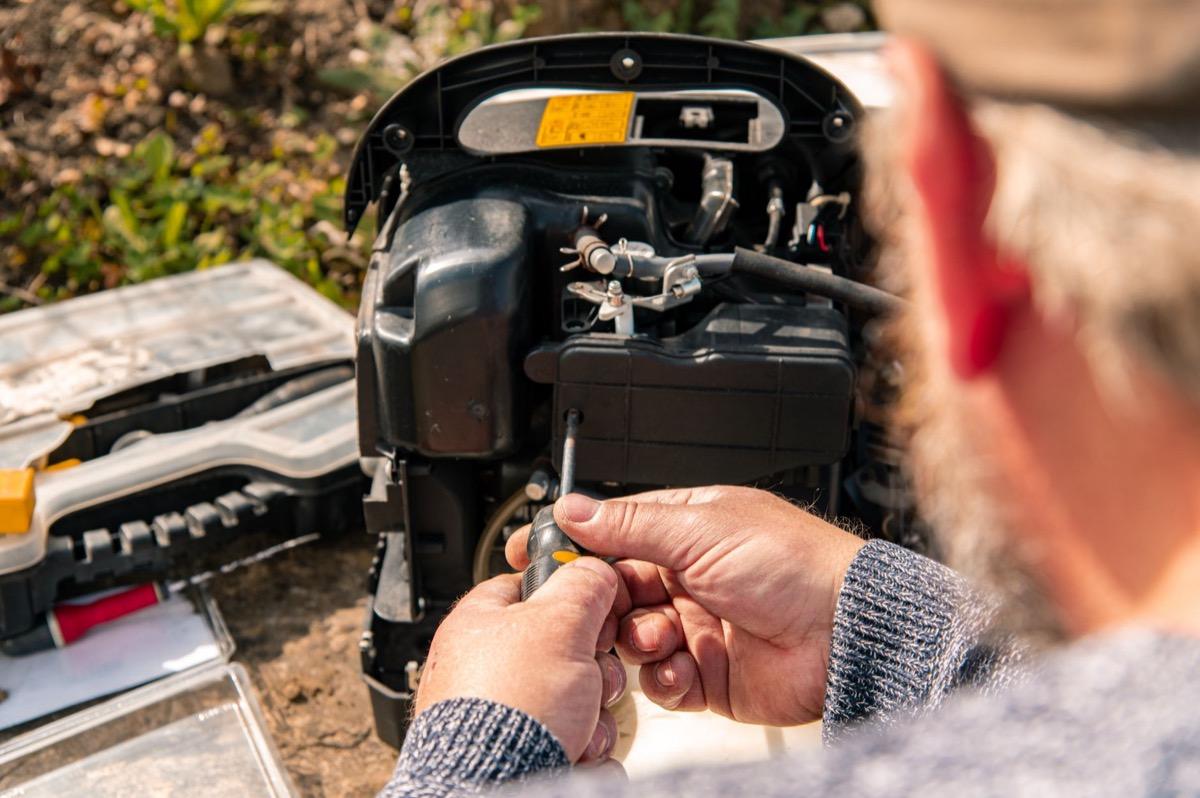
By our service team · vetted by the techs who do this daily
Do these steps first, in this order
1. Unplug the appliance, or switch it off at the wall if it's hardwired. 2. Reset the breaker once with the appliance disconnected. 3. If it holds, the problem is likely in the appliance and not the wiring. 4. If it trips again with nothing plugged in, the circuit itself needs an electrician. 5. Note what the appliance was doing when it tripped, whether it was filling, heating, spinning, or defrosting. That timing tells us a lot. 6. Check whether other outlets on the same circuit died too. 7. Write down the appliance model number from the door frame or back panel. Then call us. Don't rush any of it. One reset with the load removed is a test, not a fix.
What not to do, even once
Never hold a breaker in the on position. Never tape it, wedge it, or swap in a larger one. That breaker is sized for the wire behind the wall, and a bigger one lets the wire cook instead. Skip the extension cord workaround. Skip the "other outlet" test on something heavy like a dryer or a window unit, because you may just move the fault to a second circuit. Don't open the appliance's back or control panel. Motors and control boards hold charge and heat you can't see. And don't keep running a machine that trips mid-cycle. Each restart puts more stress on the same weak part. After the second trip, stop guessing.
When to stop and get out
Some signs mean you leave the house and call 911 from outside. Smoke or flame. An outlet cover that's hot or discolored. Crackling or buzzing from the wall or the panel. A burning-plastic smell that keeps getting stronger. If the main breaker is safe to reach on your way out, shut it off. If it isn't, go anyway. Gas dryers and gas ranges get one more rule. If you smell gas, don't touch any switch at all, not the lights and not the breaker. Open a door, walk out, and call your gas utility from the sidewalk. A tripped breaker is normal. Heat and smell are not.
Call us or call the utility?
Call the utility when the trouble is outside your walls. That means flickering across the whole house, lights dimming on their own, half your outlets dead at once, a burning smell at the meter, or any gas odor. Call an electrician when the breaker trips with the appliance fully unplugged, or when the same circuit fails with different appliances on it. Call us when one machine trips the breaker and nothing else does. That usually points to a shorted heating element, a failing motor, a pump seized with lint or scale, or moisture and salt-air corrosion inside a terminal block. Reach us.
Why it happens here on the Island
Two local things wear appliance wiring faster than they should. Salt in the air creeps into vents, terminals, and dryer housings, and it's worse south of Sunrise or anywhere near the bay. Corroded connections run hot, then arc. Hard water is the other one. Scale builds up on dishwasher and washer heating elements. A scaled element works harder, overheats, and can crack open, and a cracked element grounding out trips breakers all day long. We schedule around commutes, so evening windows are available. Tell us what time you're actually home and we'll aim for that. Have the model number ready when you call and we'll come stocked for the likely part.
When an Appliance Keeps Tripping the Breaker — fast answers
Is it safe to reset the breaker once?
Yes, once, with the appliance unplugged and no smell of smoke or gas. That single reset tells you whether the fault sits in the appliance or in the circuit. What you want to avoid is resetting again and again with the load still connected.
Why does it only trip partway through the cycle?
Because the failing part isn't drawing power until then. Heating elements, drain pumps, and defrost heaters each come on at specific points. Tell us the exact minute or stage and that narrows the diagnosis fast.
Could it just be a bad breaker?
Sometimes. Breakers weaken with age and will nuisance-trip on normal loads. We rule out the appliance first, though, since a shorted element or motor is more common. An electrician confirms and replaces the breaker itself.
How it works
- Step 1
Tell us what it's doing
Describe the noise, the leak, or the error code on the panel. Brand and rough age help too. We use that to bring likely parts on the first trip instead of guessing in your kitchen.
- Step 2
Pick a window that works
Plenty of our neighbors leave before sunrise and get home after six. We schedule around trains and traffic, later slots included, so nobody burns a vacation day waiting on a repair van.
- Step 3
Diagnose, then repair
Our technician tests the machine, finds the failed part, and explains what's wrong in plain words. You approve the work before anything gets replaced. Most repairs finish during that same visit.
- A real person answers
- Open 7 days
- Written quote before work starts
Why homeowners call us
- Salt air is factored inCoastal humidity eats at terminals, brackets, and control boards. We look for corrosion behind the panel, not just the obvious broken part. Cleaned and protected connections help a repair hold up through another damp winter.
- Hard water knowledgeScale clogs dishwasher spray arms, coats heating elements, and stiffens water valves. If your dishes come out gritty or the washer fills slowly, mineral buildup is often behind it. We check for it every time.
- Wide service areaHomeowners across six Northeastern states call us for laundry, kitchen, and cooling work: refrigerators, freezers, washers, dryers, dishwashers, ovens, ranges, and cooktops. One number to call, whichever appliance quit on you.
- Straight talk on old unitsSometimes a repair makes clear sense. Sometimes the machine is worn past the point of value, and we say so. You get an honest read on the condition before you decide to fix or replace.
- All major brands, gas & electricOne independent crew for Whirlpool, Samsung, GE, LG, Maytag, Bosch and more.
- Straight answersIf replacing beats repairing, you hear it from us first.
About this guide
When the easy checks change nothing, it's time for a tech
Describe what you found and we'll take it from there. Booking takes about a minute.
- A real person answers
- Open 7 days
- Written quotes
- All major brands
- Gas & electric
Rather not call? Get a free quote →